- Intentional Dollar
- Posts
- Exploring going toward energy, old tools, and quicksand
Exploring going toward energy, old tools, and quicksand

Logan
February 08, 2026
In partnership with

Exploring going toward energy, old tools, and quicksand
Happy Sunday! Thanks for reading Intentional Dollar — where we look at old money ideas through a new perspective.
What’s inside?
One idea to experiment with
Two quotes from others
Three questions to dig deeper
Four lines of poetry for the point
Disclaimer: This is not investment advice. These weekly posts represent my simple thoughts, a few quotes, and some questions — for educational purposes only.
There’s more to AI than ChatGPT.

If you’re only using AI to rewrite emails, you’re doing it wrong.
The AI for Business & Finance Certificate from Columbia Business School Exec Ed breaks down how to use AI to make faster, more strategic decisions at work.
Save $300 with code SAVE300 + $200 with early enrollment by Feb. 17.
One idea to experiment with:
Going Toward Energy:
Purpose and meaning are heavy words. Their use suggests an existential exercise, a herculean effort to arrive at the right answer, the implication being that there even is one.
What’s my purpose?
What’s the meaning behind this pursuit?
You can feel the weight in those questions. They attempt to illuminate an entire road we haven’t yet walked. They ask for certainty about a future self we haven’t met, in circumstances we can’t predict. No wonder they invite spin-outs and mental wandering. They are long-term questions demanding a lifetime answer.
Like other high-energy, time-consuming tasks, we procrastinate. We assume the answer will come in a dream. That our stars will align. That clarity will arrive fully formed.
But what about energy? What gives you energy?
It’s a lighter question. More immediate. Instead of asking for destiny, it asks for data. It doesn’t require you to solve your life.
Energy might be a more accessible entry point into purpose, not because it replaces it, but because it is observable. Purpose is abstract and future-facing. Energy is embodied and present. One lives in theory; the other shows up in the body.
When people talk about purpose, they rarely describe a mission statement. They describe a feeling. It lights me up. It brings me joy. I lose track of time. I feel clear and alive.
Finding “the thing” is far harder than identifying the feeling. So perhaps the feeling is the backdoor. Instead of obsessing over the lifelong calling, we track moments of sustained aliveness. We outsmart ourselves.
We become Pac-Man, collecting energy pellets and dodging the poisonous purpose ghosts, the version of purpose that insists there is one correct answer and that we’d better find it before it’s too late.
Orienting toward energy lowers the stakes. It opens the gates of experimentation. It is safe to try something simply to see how it feels.
I helped someone financially, my day felt steadier after.
I built a piece of code, I had focused energy for hours.
I sat down to write, I lost track of time.
But not all energy is equal.
Some energy is novelty, some is avoidance dressed as productivity.
Scrolling can stimulate. Starting ten projects can excite. Talking about plans can feel energizing without demanding risk.
So the question is not merely, “What gives me energy?” but “What kind of effort generates sustained, coherent energy?”
There is a difference between stimulation and vitality. Between distraction and engagement.
Purpose may not be about energy in the moment. Many purposeful acts are difficult, repetitive, even draining. Building something over years often includes long stretches of doubt. But there is often a deeper current, a sense of chosen difficulty, of meaningful strain that continuously provides bites of energy throughout the endeavor.
The energy we’re looking for is not pleasure. It is aliveness. A marriage between action and actualization.
And our money? Money often serves as false purpose when it should serve as an amplifier for real purpose. Even those that promise to use their resources well tricking themselves into believing that money isn’t sitting in the driver’s seat.

go for sustainable energy and you’ll get closer to purpose
Two quotes on old tools:
As we progress throughout the levels of life, the tools we need to use change. The beliefs and actions that you used to beat the first few levels, now, leave you stalled. You must evolve and find some more tools.
“What got you here won’t get you there.”
“The greatest danger in times of turbulence is not the turbulence; it is to act with yesterday’s logic.”
Three questions on quicksand:
What situation am I in that feels like I’m stuck in quicksand?
What if I am not stuck, but exhausting myself by fighting the wrong way?
What specific fear is keeping my thrashing instead of calmly look for the ground, “spreading my weight” and getting out?
Which question stuck with you? Questions like these are spotlights for the mind. Reply to this email and let me know which one shined light on a previously dark cave.
Four lines of poetry for the point:
Energy is currency
Meaning unwrapped
The reward for an action
Not the existential trap
Contact Me:
Content ideas, questions? Reply to this email or reach out to me at [email protected]
Disclaimer: This is not investment advice. These weekly posts represent my simple thoughts, a few quotes, and some questions — for educational purposes only.
Someone just spent $236,000,000 on a painting. Here’s why it matters for your wallet.
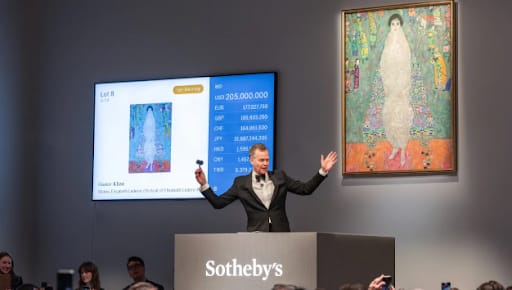
The WSJ just reported the highest price ever paid for modern art at auction.
While equities, gold, bitcoin hover near highs, the art market is showing signs of early recovery after one of the longest downturns since the 1990s.
Here’s where it gets interesting→
Each investing environment is unique, but after the dot com crash, contemporary and post-war art grew ~24% a year for a decade, and after 2008, it grew ~11% annually for 12 years.*
Overall, the segment has outpaced the S&P by 15 percent with near-zero correlation from 1995 to 2025.
Now, Masterworks lets you invest in shares of artworks featuring legends like Banksy, Basquiat, and Picasso. Since 2019, investors have deployed $1.25 billion across 500+ artworks.
Masterworks has sold 25 works with net annualized returns like 14.6%, 17.6%, and 17.8%.
Shares can sell quickly, but my subscribers skip the waitlist:
*Per Masterworks data. Investing involves risk. Past performance not indicative of future returns. Important Reg A disclosures: masterworks.com/cd
Reply