- Intentional Dollar
- Posts
- Exploring the environments, schedules, and enough
Exploring the environments, schedules, and enough

Logan
January 25, 2026
In partnership with

Exploring the environments, schedules, and enough
Happy Sunday! Thanks for reading Intentional Dollar — where we look at old money ideas through a new perspective.
What’s inside?
One idea to experiment with
Two quotes from others
Three questions to dig deeper
Four lines of poetry for the point
Disclaimer: This is not investment advice. These weekly posts represent my simple thoughts, a few quotes, and some questions — for educational purposes only.
What Will Your Retirement Look Like?

Planning for retirement raises many questions. Have you considered how much it will cost, and how you’ll generate the income you’ll need to pay for it? For many, these questions can feel overwhelming, but answering them is a crucial step forward for a comfortable future.
Start by understanding your goals, estimating your expenses and identifying potential income streams. The Definitive Guide to Retirement Income can help you navigate these essential questions. If you have $1,000,000 or more saved for retirement, download your free guide today to learn how to build a clear and effective retirement income plan. Discover ways to align your portfolio with your long-term goals, so you can reach the future you deserve.
One idea to experiment with:
The Environments
How many different environments — collections of people, things, behaviors, actions, expectations, and beliefs — are you in on a daily basis? A few common ones probably jump to mind: work, school, home, the gym, church, bars or restaurants, stores, vacation homes, coffee shops, computers, phones, TVs.
This isn’t exhaustive, but it captures where most of us spend most of our time. You’ll notice these are broadly defined environments. Within your home, for example, there are rooms—or sub-environments—you spend time in. These environments form a stream with a strong current. And the current’s powerful: it’s much easier to go with than against.
Why does this matter? Because our decisions are shaped, formed, and guided by the environments we inhabit.
When strategically designed, an environment becomes a hyper-efficient behavior facilitator. An office facilitates work. A bedroom facilitates rest. A kitchen facilitates cooking and sharing a meal. Bars and restaurants (generally) facilitate drinking and indulgent foods—anyone else weak for cheesecake?
Whether an environment was created by us or by others, it sets a norm, a set of behaviors it encourages. That’s key because environments don’t force identical behavior. You can eat healthy at a restaurant, but doing so means swimming upstream.
Some important takeaways:
The lowest-energy path is to go with the norms in your environment, so that’s what we default to.
We can design our own environments to make desired behaviors easier.
Environments exist to satisfy a specific need.
If the behaviors you want aren’t happening, there’s likely an environmental design flaw. If you don’t write in your office, maybe it’s because your phone is there, or an interesting book is in sight.
Think of environment design like building a sealed room meant solely to produce certain behaviors. Each “thing” that distracts from the desired behavior is a leak—temptations that pull you off course. Want better sleep? A TV, a phone, or light sneaking through a curtain is a leak.
Focusing on redesigning your environments to remove leaks greatly improves your chances of producing the right behaviors.
How does this relate to your dollars? What are your leaks, and how can you patch them? How can you redesign clunky, crowded, or broken environments to better support your goals?
And a final note: your phone is an environment itself. It’s a portal into a virtual world that will tempt your attention if you bring it into the wrong environments.
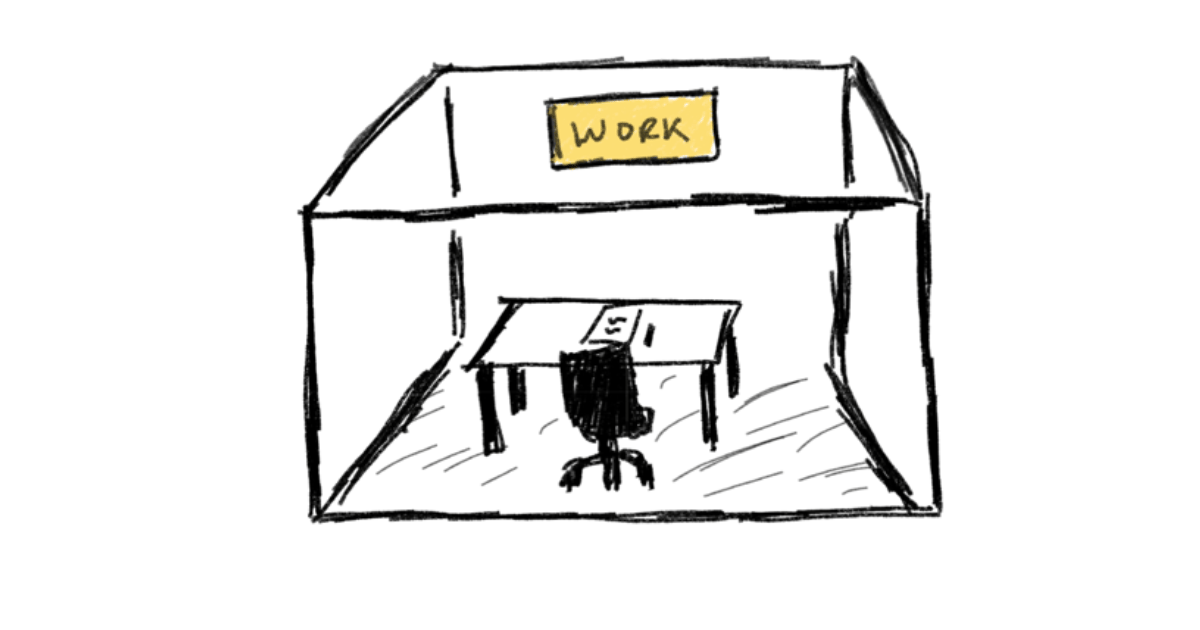
build focused environments where the normal behavior is your desired behavior
Two quotes on schedules:
If you have a laundry list of money to-do’s, try scheduling them; give yourself a date and a deadline.
“The key is not to prioritize what’s on your schedule, but to schedule your priorities.”
“What gets scheduled gets done.”
Three questions on enough:
What is enough for me?
How will I know the next acquisition is the one that makes me feel satisfied?
How can I engineer constraints against moving goal posts?
Which question stuck with you? Questions like these are spotlights for the mind. Reply to this email and let me know which one shined light on a previously dark cave.
Four lines of poetry for the point:
The environments we’re in
The water in which we swim
Streams that carry us with
To go against is to fight them
Contact Me:
Content ideas, questions? Reply to this email or reach out to me at [email protected]
Disclaimer: This is not investment advice. These weekly posts represent my simple thoughts, a few quotes, and some questions — for educational purposes only.
But what can you actually DO about the proclaimed ‘AI bubble’? Billionaires know an alternative…

Sure, if you held your stocks since the dotcom bubble, you would’ve been up—eventually. But three years after the dot-com bust the S&P 500 was still far down from its peak. So, how else can you invest when almost every market is tied to stocks?
Lo and behold, billionaires have an alternative way to diversify: allocate to a physical asset class that outpaced the S&P by 15% from 1995 to 2025, with almost no correlation to equities. It’s part of a massive global market, long leveraged by the ultra-wealthy (Bezos, Gates, Rockefellers etc).
Contemporary and post-war art.
Masterworks lets you invest in multimillion-dollar artworks featuring legends like Banksy, Basquiat, and Picasso—without needing millions. Over 70,000 members have together invested more than $1.2 billion across over 500 artworks. So far, 25 sales have delivered net annualized returns like 14.6%, 17.6%, and 17.8%.*
Want access?
Investing involves risk. Past performance not indicative of future returns. Reg A disclosures at masterworks.com/cd
Reply